
For many physical therapy practices, the referral process is measured by how many recommendations physicians make. But a recommendation alone does not put a patient on the schedule. The referral is not complete until the patient understands the next step and acts on it. Effective physician referral marketing requires more than asking for referrals. It requires systems that help physicians communicate recommendations and help patients take action. That is why physical therapy referral pads and tear cards work best as a pair. The Rx pad helps the physician make and communicate the referral. The tear card gives the patient a clear, useful reminder of whom to contact and what to do next.
Physician Referral Strategies for Physical Therapists
One of the most effective physician referral strategies for physical therapists is making the referral process simple for both providers and patients through customized Rx pads and educational tear cards.
The Rx pad starts the referral conversation. The tear card helps the patient finish it.
Together, they create a practical referral communication system that supports the physician, the patient, and the physical therapy practice.
Here is how the paired approach works—and why it can be more effective than treating the two pieces as separate marketing products.
Every Referral Has Two Audiences
A successful referral must work for two people:
- The physician making the referral
- The patient who must follow through
The physician needs a fast, familiar way to communicate the recommendation without adding unnecessary steps to a busy visit.
The patient needs simple information that makes the next action obvious: who to call, where to go, and how to schedule.
Focusing on only one audience leaves a gap. An Rx pad can communicate the clinical recommendation, but the patient may still leave without clear practice details. A tear card can present those details, but it is more useful when it is delivered as part of the physician’s referral.
The paired system connects the recommendation to the next action.
The Referral Process Does Not End With the Recommendation
Many practices concentrate on earning referrals from physicians. Fewer examine what happens after the physician says, “You should go to physical therapy.”
Between that recommendation and the first appointment, the patient must remember the practice, find its contact information, understand the scheduling process, and decide to follow through. Any uncertainty or inconvenience can interrupt the handoff.
That handoff deserves the same attention as physician outreach itself.
A well-designed referral pad and tear card combination gives each person the information needed at the moment it matters. The physician can communicate quickly during the visit, and the patient leaves with a dedicated reminder that supports follow-through.
The challenge is not simply generating referrals.
The challenge is creating a clear path from recommendation to appointment.
Step 1: The Rx Pad Makes the Referral Fast and Clear
In a busy office, a referral tool has to be easy to find and easy to use. A customized physical therapy Rx pad can organize common information in a consistent format while keeping the referral process simple.

Depending on the practice and referral relationship, the pad might include common diagnoses, affected body regions, treatment considerations, precautions, and space for notes. The design should help the provider communicate the recommendation—not attempt to replace clinical judgment or required documentation.
A straightforward workflow might be:
- Check boxes
- Add notes
- Sign
- Hand off
The pad also keeps the physical therapy practice visible within the referral office. More importantly, it provides a ready-to-use tool that supports the referral source’s workflow instead of asking staff to create a process around your marketing.
But the physician’s portion of the handoff is only half of the experience.
Step 2: The Tear Card Educates the Patient and Gives Them a Next Step
Once the visit ends, responsibility for moving the referral forward often shifts to the patient. Verbal instructions alone may be difficult to remember, especially when the patient has received other information during the appointment.

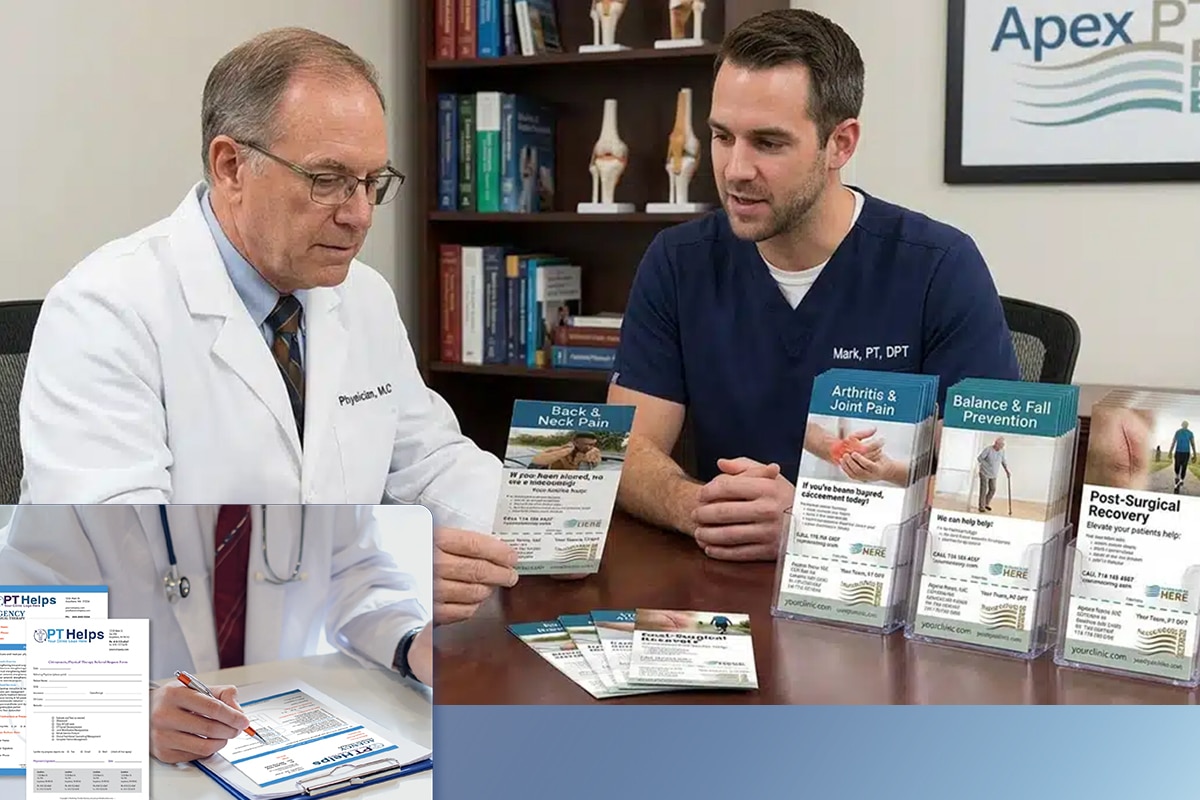
A tear card turns the recommendation into a portable education and action guide. Each card can focus on a specific diagnosis or patient need—for example, back pain, balance and fall risk, joint replacement, or another condition commonly referred to the practice. Because the appropriate card is paired with the Rx pad, the physician can reinforce why physical therapy may help while giving the patient clear next steps at exactly the right point in the referral conversation.
A useful diagnosis-specific tear card may include:
- A plain-language explanation of how physical therapy may help with the patient’s diagnosis or concern
- Relevant benefits or goals, such as improving mobility, reducing pain, building strength, or lowering fall risk
- Practice name and phone number
- Address, landmarks, or concise parking guidance
- Website or scheduling instructions
- Office hours
- A brief explanation of what to expect
- A QR code, when appropriate, that leads to a useful destination
The goal is not to crowd one card with every possible condition or detail. A focused set of cards allows the physician to select the education that matches the referral—for example, a Back Pain card for one patient and a Balance and Fall Risk card for another. Each card should briefly explain the value of physical therapy, answer the patient’s immediate questions, and make the next action easy to understand.
The Rx pad communicates the need for physical therapy. The diagnosis-specific tear card explains how therapy may help and keeps the destination and next step visible.
Why the Combination Works Better Than Either Piece Alone
An Rx pad answers the physician-facing question:
“What should this patient do?”
A diagnosis-specific tear card answers the patient-facing questions:
“How can physical therapy help with this problem, who should I contact, and how do I get started?”
The referral pad supports communication from the referring provider to the physical therapy practice.
The tear card supports communication from the referring provider to the patient by reinforcing the reason for referral, explaining relevant benefits of physical therapy, and providing a clear path to scheduling.
Together, they reduce the communication gap between recommendation and scheduling. They do not guarantee that every referred patient will book, but they remove avoidable uncertainty from the process.
Design the Pair as One Referral System
The strongest programs do more than place a tear-off section beneath a prescription form. Both pieces should be planned together, with a clear role for each.
Keep the physician side efficient
Prioritize quick scanning, familiar terminology, useful selections, adequate writing space, and clear practice identification. Avoid adding marketing copy that competes with the clinical purpose of the pad.
Keep the patient side actionable
Use plain language, readable type, and one obvious next step. Build a focused family of diagnosis-specific cards rather than forcing every message onto one generic card. Each card should briefly explain how physical therapy may help with that condition, while keeping contact and scheduling information prominent. If a QR code is used, the printed phone number and web address should still be easy to find.
Make the two pieces visually connected
Consistent colors, typography, and practice information make the handoff feel intentional. The tear card should look like the patient-facing continuation of the referral, not an unrelated advertisement.
Pair Print With Digital Follow-Through
A paired print system is not an argument against digital referral tools. Print and digital channels can support different moments in the same patient journey.
For example:
- The Rx pad helps communicate the referral during the office visit.
- The diagnosis-specific tear card explains how physical therapy may help and gives the patient a physical reminder and contact path.
- Online scheduling makes it easier to request an appointment.
- Text, email, or phone follow-up can help the practice continue the conversation.
- The EMR and referral workflow support documentation and care coordination.
In this model, print supports communication at the point of referral while digital systems support scheduling, tracking, and follow-up.
Practices should also review their referral materials and workflow for privacy, documentation, and other applicable requirements. Avoid putting unnecessary patient information on take-home materials, and seek qualified compliance guidance for your circumstances.
Measure the Handoff, Not Just the Number of Pads Distributed
A referral communication program is more useful when it can be evaluated. Instead of counting only how many pads were delivered, track what happens after distribution.
- Which referral sources use the materials?
- How often do offices request restocks?
- How many patients schedule after receiving a referral?
- Which scheduling path—phone, website, or QR code—patients use?
- Where do referred patients encounter confusion or delay?
Use unique, easy-to-manage tracking methods only when they fit the patient experience. A QR code or dedicated landing page may help, but the measurement method should never make scheduling more complicated.
The Bottom Line
A customized physical therapy Rx pad helps the physician make and communicate the referral.
A coordinated, diagnosis-specific tear card helps the patient understand the potential benefits of physical therapy and act on the referral.
Separately, each piece has value. Together, they create a more complete referral experience—one that supports the physician’s workflow and gives the patient a clearer path to care.
The best referral tools do not merely promote a practice. They make the next step easier for everyone involved.
If your practice already supplies Rx pads to referral sources, consider whether the patient leaves with equally clear instructions. Designing the pad and tear card as one coordinated system can turn a simple printed form into a stronger referral handoff.
As part of an effective physical therapy referral marketing strategy, customized Rx pads and tear cards help improve physician referral marketing efforts by making it easier for patients to follow through on recommended care.
Frequently Asked Questions About Physical Therapy Referral Pads
How do physical therapy Rx pads help generate more referrals?
Physical therapy Rx pads help physicians communicate referral recommendations clearly and give patients a tangible reminder of where to seek care.
Why are tear cards effective for referral marketing?
Tear cards provide patients with educational information, contact details, and guidance on the next steps, increasing the likelihood they follow through with treatment.
Can referral marketing materials improve patient follow-through?
Yes. When patients receive both a physician recommendation and take-home educational materials, they are more likely to remember the referral and schedule an appointment.
What should be included on a physical therapy tear card?
A tear card should include the clinic’s contact information, referral message, educational content, and a clear call-to-action.
Frequently Asked Questions About Physical Therapy Tear Cards
What is a physical therapy tear card?
A physical therapy tear card is a patient education and referral marketing tool that provides helpful information about a condition, treatment option, or service while also giving patients an easy way to remember and contact a physical therapy practice.
Why are tear cards effective in referral marketing?
Tear cards support referral marketing by reinforcing the physician’s recommendation after the patient leaves the office. They provide a tangible reminder of the referral, helping patients remember the clinic and understand the next step in the care process.
How do tear cards improve patient follow-through?
Many patients forget referral instructions or delay scheduling an appointment. Tear cards give patients key information they can take home, making it easier to remember the referral and act on it when they are ready to schedule care.
What information should be included on a tear card?
A well-designed tear card should include the clinic’s name, contact information, website, key services, educational content relevant to the patient’s condition, and a clear call to action.
Can tear cards be customized for a physical therapy practice?
Yes. PT Referral Machine customizes tear cards with a clinic’s branding, provider information, contact details, and marketing message to create a professional referral experience that reflects the practice.
What conditions can physical therapy tear cards address?
Tear cards can be created for common conditions and treatment areas such as back and neck pain, arthritis and joint pain, balance and fall prevention, post-surgical recovery, sports injuries, and other rehabilitation services.
Why should physical therapists use tear cards with Rx pads?
Rx pads help physicians communicate referrals, while tear cards help patients remember and follow through on those referrals. Together, they create a more complete referral system that benefits physicians, patients, and physical therapy practices.
About The Author
David Steinberg is the Founder and Senior Consultant at PT Referral Machine. Since 2004, David has helped private practice owners improve referral relationships, attract more patients, and grow their practices through strategic marketing systems. PT Referral Machine specializes in referral marketing solutions for physical therapy clinics, including customized Rx pads, tear cards, physician marketing materials, patient education tools, and referral conversion strategies designed to increase patient follow-through and support long-term practice growth.